

Today I’m highlighting the Lear Theater, but there are multiple public meetings this week, including the Reno City Council & Redevelopment Agency Board. Consult the City’s Current & Upcoming Meetings webpage for those agendas and info packets.
This is Reno has a preview of one City Council item here:
Reno city manager’s annual review heads to city council after favorable employee evaluation (This is Reno 7/24/26)
And Mike Van Houten of Downtown Makeover (who serves on the Redevelopment Agency Advisory Board or RAAB) previews an important item coming in front of the Redevelopment Agency Board on Wednesday:
RAAB recommends ‘no’ to sponsoring Dancing in the Streets with redevelopment funds (Downtown Makeover 7/27/26)
Note that his discussion there involves not just Dancing in the Streets, but all of the recommendations formulated by the RAAB on July 13th regarding whether many of the RDA’s programs are in compliance with Nevada state redevelopment laws.
After discussing the Lear, I’ll have a few updates and previews of other public meetings occurring this week plus the latest news. And after that, I want to draw your attention to a national issue with potentially devastating consequences for historic and cultural resources throughout our community, region, and state.
But first, let’s talk about the Lear.
The City’s new common-sense timeline for the Lear Theater
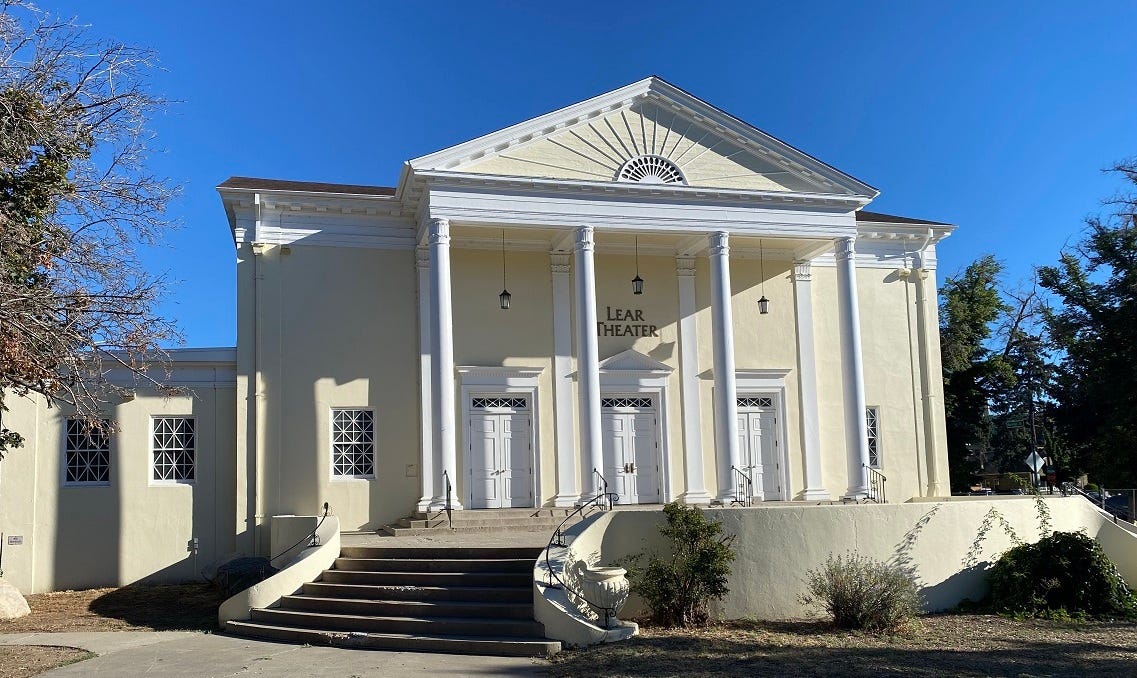
This past week, City of Reno staff provided the Reno City Council and RDA Board with an updated timeline for implementing their recent decisions about the 1939 First Church of Christ, Scientist property, known locally as the Lear Theater.
You can read about the revised timeline in This is Reno here:
City outlines timeline for Lear Theater study and redevelopment bids (This is Reno 7/22/26)
And here’s the original staff memo on which this article was based:
I was honored to participate in the meetings with City staff members and Councilmember Naomi Duerr to formulate this timeline, which I heartily endorse, and I’d like to make sure everyone understands what’s involved and how this represents an exciting step forward—I promise!
It’s important to note that this new timeline doesn’t introduce any new actions, just lays out the sequencing for the two directives that City Council approved last spring:
Issue a Request for Proposals for the property (decided in April)
Dedicate $2 million in Redevelopment Agency funding to some basic exterior improvements for the property (decided in May)
The new timeline integrates these two directives in a manner that can best facilitate the desired result: identifying a development partner to help accomplish the responsible preservation and adaptive reuse of the property.
There’s a vote coming up this week to tweak the proposed procedure a tiny bit, so I’ll get to that in a minute. But first, let me take you through the timeline and explain what it means and why I support it.
STEP 1: Complete Basic Exterior Site Improvements
CURRENT TIME FRAME: Bid request issued July 24, 2026; contract to be considered by the RAAB on September 14th and by the RDA Board on September 23rd; construction work to commence October 2026 (this could shifted to start a bit earlier—see “SIDE NOTE” below)
This is the first of the expenditures approved by City Council in May, and the request for bids was issued last week. These exterior improvements were previously designed using ARPA funds, have already undergone necessary reviews by the State Historic Preservation Office and CCCHP and will include the following:
replacement of deteriorated concrete at the south entrance steps and terrace landing
installation of ADA-compliant handrails
replacement of landscaping consistent with the historic landscape plan
installation of irrigation and architectural landscape lighting
construction of a temporary wrought iron perimeter fence and gates
As City staff write, “These improvements will enhance the appearance of the property, improve public safety and accessibility, protect the site, and address deferred maintenance while long-term planning continues.”
I’m excited that these improvements are finally underway and when completed will not only better secure the building but could enable use of the porch, stairways, and grounds while planning for the building continues.
STEP 2: Commission a Feasibility Study
CURRENT TIME FRAME: Consultant Agreement to be considered by the RAAB on August 3rd and by the RDA Board (City Council) on August 26th; work to commence in September (also potentially to be expedited this week—see “SIDE NOTE” below).
I already can hear the groans of “Not another study!!” But don’t be alarmed; this is a fantastic and important step, was approved in May along with the above expenditures, and will provide new information critical to moving this whole process forward.
This study will not replicate information contained in the Historic Structure Report that the City of Reno commissioned in 2024. That report (accessible here) centered on the property’s history, development, physical condition, maintenance recommendations, and regulatory requirements, and provided suggested layouts for its potential use as a performing arts space or cultural center, as requested by the City. It focused on what is required to responsibly preserve the physical property.
This new study is all about feasibility and will include the following:
Community and stakeholder outreach, including focus groups and public meetings
Evaluation of potential adaptive reuse scenarios
Market analysis, including demographic, economic, and real estate conditions
Financial and operational feasibility
Preliminary implementation strategies and rehabilitation consideration
This study will provide everyone with the most up-to-date and comprehensive data regarding the community demand and desire for various uses and help to determine whether a venue of this size and layout could fulfill those demands and desires.
That data can then help anyone interested in the building to develop more realistic proposals for it, whether they ultimately propose that the property be used as a performing arts space, cultural center, museum, visitor center, or something else.
SIDE NOTE: This Wednesday, July 29th, the Redevelopment Agency Board (City Council) will consider modifying the steps for the two actions listed above. Under Item C.2 (Staff Report here), they’ll consider eliminating the requirement that the selection of contractors for the exterior improvements and feasibility study go first to the Redevelopment Agency Advisory Board (RAAB) for review and recommendations. Taking RAAB review out of these two selections and allowing them to go straight to the RDA Board seems reasonable and could expedite the work, so I would have no problem with that. All other selections, however, should first go to the RAAB for input, in my opinion.
STEP 3: Issue a Request for Interest (RFI)
CURRENT TIME FRAME: February-March 2027
As previously explained, the solicitation process to adaptively reuse the Lear will involve two steps: a Request for Interest (RFI) followed by a Request for Proposals (RFP). This approach has been followed with success elsewhere and will allow the public (and City Council) to decide which ideas and teams they believe are best suited to develop more thorough proposals without requiring all interested parties to expend considerable resources toward developing highly detailed plans at the outset.
It will also provide the community with more time to review, understand and lend their support to the proposals that most appeal to them before Council makes a final decision. And I think it’s safe to say that no one is going to get this project accomplished without significant community support.
It’s important that the Request for Interest be issued after the Feasibility Study is completed so the City can incorporate its findings into the RFP solicitation, and so all interested parties can fully digest, consider, and incorporate that data into their proposals. As staff indicates, it will also help the City better evaluate those proposals.
The RFI will ask respondents to provide the following:
An initial redevelopment concept
A general idea of the components of the project team
A preliminary operational and financial approach
The responses to this Request for Interest would then be evaluated and the teams deemed most qualified would be invited to participate in the subsequent RFP process.
One question that the staff memo doesn’t answer is precisely WHO will be evaluating these responses and selecting the teams that will move on to the RFP phase, or what is meant by “most qualified.” It states that “Staff” will do the selection, but not which staff, and I think any selection committee should also have other representatives, too. I’d also like to see these proposals discussed at public meetings such as those of the Historical Resources Commission, Redevelopment Agency Advisory Board and/or City Council/RDA Board so any discussions and decisions regarding these proposals are clear and transparent.
STEP 4: Issue an Invitational Request for Proposals (RFP)
CURRENT TIME FRAME: April-September 2027
The teams shortlisted through the Request for Interest phase will be invited to respond to the subsequent Request for Proposals, which will require much more specificity. Required elements for those responses will include the following:
Detailed financial pro forma
Financing strategy
Operations and management plan
Conceptual design and architectural approach
Project implementation schedule
This is all highly detailed, as it needs to be for the City of Reno and its residents to feel confident that the selected team will be qualified to get the job done. And they’d have five months after the invitation to put the plan together, which seems reasonable to me, since financial pro formas and these other components are no joke. This could also provide the time to get any potential public partners on board, considering the lead time required for consideration at publicly-noticed meetings.
I know we are all impatient to see this property in use, and I truly believe that this approach will get us there. It’s thoughtful and methodical and fulfills the City of Reno’s self-imposed obligation to serve as a responsible steward for this important property as a plan is developed for its adaptive reuse. It’s important that we do this right, so let’s all lend the City our support and get this thing done!
More Local Meetings for the Week of July 27, 2026
Washoe County School Naming Committee - Monday, July 27th at 5:30pm
PREVIEW: School district committee to recommend finalists for new elementary school name (This is Reno 7/26/26)
Washoe County School Board - Tuesday, July 28th at 2pm
PREVIEW: WCSD trustees to consider bus financing and school safety initiatives (This is Reno 7/27/26)
NEWS DIGEST: The latest in local urban development
Updates on the July 22nd Reno City Council & Redevelopment Agency Board meetings can be found here:
The City’s official July 22, 2026 Reno City Council Meeting Highlights
Reno City Council considers code updates for massage parlors, alcohol-related businesses (This is Reno 7/23/26)
And here’s some other recent local and regional development-related news:
Reno median home price surges past $700,000 for the first time (RGJ 7/27/26) Affordability concerns continue as the median home price in Reno broke past $700,000 for the first time while Sparks also set an all-time high in June.
Titus calls on Lombardo to freeze data center tax abatements (Nevada Current 7/23/26) Nevada Rep. Dina Titus is targeting state tax breaks for the only data center project approved on U.S. Bureau of Land Management acres, a controversial proposal three miles outside Boulder City limits.
Henderson City Council rejects data center moratorium (Nevada Current 7/22/26) The Henderson City Council rejected a proposal Tuesday to implement a six month moratorium on new data center applications, instead choosing to change the city’s development agreement process.
OPINION: Big Pahrump data center proposal turns heads of skeptical residents (John L. Smith, Nevada Independent 7/26/26) Can an aggressive PR campaign and windfall promises for a cash-strapped region persuade the cynics and critics?
Idaho real estate investment firm acquires Legends at Sparks Marina (This is Reno 7/26/26) A real estate investment company has acquired the Legends at Sparks Marina shopping center in Sparks, the company, Alturas Capital Partners, announced Friday in a press release.

NATIONAL ALERT: Federal actions regarding historic preservation could have disastrous consequences for cultural and historical properties throughout Nevada.
If you care about historic properties like the Lear, I want to make sure you’re aware of some recent federal actions with potentially dire consequences for historic properties.
On Friday, July 24, the Advisory Council on Historic Preservation (ACHP) voted to advance some sweeping revisions to the regulations governing Section 106 of the National Historic Preservation Act (NHPA).
Section 106 is an essential safeguard that gives local communities, tribal nations, preservation advocates, and the general public a voice whenever federal funding or permits have a role in local development. Federally-funded projects or projects requiring federal permits, licenses, or approval can include everything from bridge construction, transmission lines, highway and road widening to affordable housing projects, data centers, large commercial projects, and much more. Section 106 currently requires that any of these “undertakings” take into account their potential effect on historic properties.
As the National Trust for Historic Preservation explains, the proposed revisions would include (but are not limited to) the following changes:
Federal agencies will no longer be required to try to avoid or minimize damage to America’s historic architecture, neighborhoods, and landscapes.
State and local governments will no longer have the right to be notified or have the opportunity to comment when federal agencies propose to damage or destroy historic places within their jurisdiction.
The public’s opportunity to comment on federal historic preservation policies or actions would now be entirely optional, at the discretion of the federal agency.
The federal government will no longer be required to consult with Native American tribes or seek their expertise regarding their own significant cultural resources.
For more details on these and other proposed changes, visit the National Trust’s webpage titled Section 106 is Under Threat: What You Need to Know.
A webinar organized by the National Trust this coming Thursday, July 30th at 10am (REGISTER HERE) will “outline some of the more serious aspects and potential impacts of the proposed changes, provide information about next steps and the timeline for the process, and what you can do to push back against this threat to the work of historic preservation.” I’ll be tuning in, and I hope you will, too.
If this proposal advances further, a Notice of Proposed Rulemaking will be issued in the Federal Register, followed by a 30-day period of formal public comment—and that’s when we will need everyone to get involved. More on that here.
In the meantime, have a great week, stay cool, and please look out for each other.
Be sure to check out my Citizen Guide for helpful resources and links to help anyone become more informed and engaged in issues related to urban development (& more) in Reno.
You can view this and prior newsletters on my Substack site, subscribe to receive each new edition in your email inbox, and follow the Brief (and contribute to the ongoing conversation) on X, Facebook & Instagram. If you feel inspired to contribute, you may purchase a paid subscription through Substack or contribute via Venmo at @Dr-Alicia-Barber, via the Buy me a coffee platform, or via check to Alicia Barber at P.O. Box 11955, Reno, NV 89510. Thank you!