
Integrating historic preservation with Reno's redevelopment
Development news, analysis, and updates for the week of February 23, 2026

I hope everyone is doing all right after this past week’s wintry blast. As we enter the final week of February, you can find the schedule for all City of Reno public meetings on the Current & Upcoming Meetings webpage. They include Wednesday’s meetings of the Reno City Council and the Redevelopment Agency Board, plus, on Thursday, the return of the Reno City Charter Committee, which I’ll discuss more below.
A BRIEF UPDATE: For those who are interested in supporting my work financially but are wary of paid subscriptions, I’m happy to introduce a new option. The “Buy me a coffee” platform allows you to support my efforts at a level of your choice (not necessarily to promote my caffeine habit, although I do love coffee!) at any time.
As always, I want to express my deep thanks to all of my supporters. You truly make it possible for me to continue to provide this service to our community, week after week.
Integrating Preservation with Land Use Planning
In reviewing this week’s agendas, I can see an increasing convergence of Reno’s Redevelopment Agency activities and initiatives with some of our most significant historic properties and neighborhoods, and yet they’re generally being discussed in separate silos—preservation on one hand, and redevelopment planning on the other.
Some of that is logistical, with these initiatives falling under different programs. But that separation is also typical of how historic preservation is sometimes treated and perceived, as though preservation and urban planning are somehow at odds, or even diametrically opposed to each other—which couldn’t be further from the truth.
I’ve mentioned before that I’m teaching a Historic Preservation course at UNR this semester, and my presentation on the first day of class in January began with this slide.
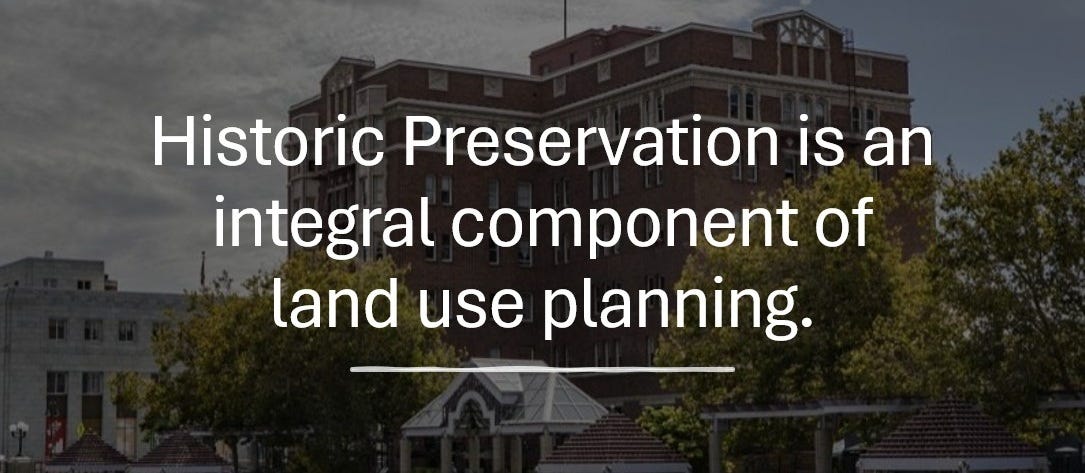
This theme governs our entire class, as we discuss preservation planning as an essential part of shaping the landscapes where we live, play, and work. The more we can integrate discussion of preservation options and goals into every planning and policy discussion, the better chance we have of capitalizing on the irreplaceable assets that historic properties comprise—and of lessening the risk that someone might claim to simply have “run out of time” to incorporate preservation into their plans.
The truth is that historic preservation can take time, foresight, and patience to execute responsibly. Often the proper groundwork must be laid in the proper sequence to make it feasible. And in order for that to happen, we need to make sure that conversations about it are early, ongoing, and inclusive.
The City of Reno often looks to the City of Boise as a model for aspects of its municipal practice, and it’s worth noting that there, Historic Preservation is housed within the Planning Division, where it’s introduced with this line:
“Preservation is not about slowing or hindering development, but rather not overlooking the value of what we already have.”
I love that. And I think it’s particularly important to remember as we pursue redevelopment in Reno, where our two redevelopment areas contain many of our most historic buildings (view the Redevelopment Area maps here). That means that every program and initiative related to redevelopment needs to be pursued with the utmost sensitivity to its potential impact on our precious historical resources.
This week’s City Council and Redevelopment Agency Board agendas are peppered with references to historic resources as well as to multiple redevelopment initiatives. Their many intersections present an opportunity for the City of Reno to truly integrate these conversations in a formal and sustained manner, in order to ensure that the City is benefiting from the interest, expertise and knowledge of our entire community when it comes to protecting and celebrating Reno’s tangible heritage.
Preservation of the Lear is a redevelopment opportunity.
First off, I need to mention something that is NOT on this coming week’s agenda. Although we were previously told that the City Council’s discussion of the Lear would take place on February 25th, I was just told on Friday that it is now scheduled for April 8th in order to “allow staff and Council additional time to ensure all necessary information and materials are prepared for a thorough review and discussion.”
I’ll admit, I’m disappointed that we have to wait even longer to discuss the terrific community meeting many of you attended in January, the results of the community survey that closed last month, and the recommendations of the Historical Resources Commission. But in the meantime, sign up for the Lear newsletter and I’ll provide updates if I learn anything new. And let’s all start imagining how renovation of the Lear can play a key role in redevelopment efforts on the west side of downtown.
On a related note, Item B.10 on the Council agenda seeks acceptance of a grant from the Nevada State Historic Preservation Office to prepare a historic context and conduct a survey of Powning’s Addition, where the Lear is located. Researched contexts and architectural surveys help to build the city’s inventory of its historic resources and evaluate their historical significance as individual properties or districts. My own research has identified even more of an African American presence in Powning’s Addition than was previously understood, and I’m excited that my students and will be working on this project alongside City staff and volunteers.
What do we want to see inside the historic Southern Pacific Railroad Depot?


I mentioned last week that the historic Reno Southern Pacific Railroad Depot turns 100 this year and that bathrooms will soon be installed in the modern addition, making it feasible to give the historic side an independent use. The Redevelopment Agency Quarterly Report indicates the City is now soliciting bids for the bathrooms.
I don’t know if the city then plans to issue a Request for Proposals (RFP) for the site, but since this is a City-owned building, it would be appropriate for the City to first re-engage with the public to discuss what the community would like to see there.
Years ago, City Council voted to make the depot a Heritage Center that would tell the story of Reno’s origins, house city archives, provide a base for historic walking tours, and more. That’s been largely forgotten, but might still be a good idea. And there’s a pedestrian walkway that leads over the railroad tracks to the Bowling Stadium, where Will Durham’s neon museum The Light Circus is scheduled to open soon.
The historic depot is listed in the National Register of Historic Places, but should immediately be placed on the City’s historic register, too, to ensure any potential changes to its exterior are reviewed by the Historical Resources Commission. And let’s think about what uses the City might specifically pursue for its adaptive reuse.
Let’s make sure any new Area Plan for East 4th Street capitalizes on and prioritizes its historical integrity.
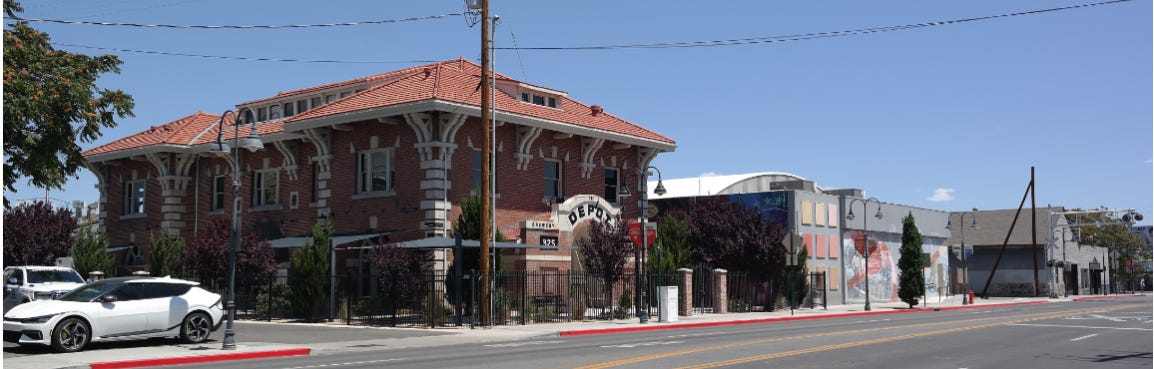
East 4th Street is another area where redevelopment and historic preservation are visibly converging. Item B.8 on the City Council agenda seeks Council approval of the nomination of a stretch of East 4th Street as a National Register Historic District, an enormously exciting development that—don’t worry!—doesn’t place any new restrictions on properties in the designated area, as the Staff Report explains:
“By listing a property on the National Register of Historic Places there is no additional protection nor are there any additional requirements. It is an honorary designation although a property listed on the National Register may be eligible to benefit from tax credits to support restoration and/or preservation efforts.”
You can read the entire document here. This listing would represent an enormous opportunity for increased tourism promotion, placemaking, and revitalization.
At the same time, Item B.3 of the Redevelopment Agency Board agenda refers to an upcoming Request for Proposals for a “4th Street Area Plan.” I don’t know what such a plan would entail since RTC Washoe already completed significant improvements to the roadway, sidewalks, lighting, and more. I have no doubt that any plan would have to involve significant public engagement, but I just want to make sure this is on everyone’s radar, and encourage the City to foreground and promote the historical significance of this corridor in any future planning efforts for it. That also means providing property owners along the corridor with information and resources empowering them to help retain the historical integrity of the properties they own.
Preservation, History, and the Redevelopment Agency
Item B.2 on the Redevelopment Agency Board agenda is an update on the Downtown Action Plan, which was adopted in 2017 to guide downtown improvements through 2024, and this report methodically indicates which of its goals have been achieved, are ongoing, in progress, or pending. You can view the slides here.
Several of these items concern history and historic preservation, and there’s been some great progress in terms of historical surveys, but two items could use more discussion and community consultation to ensure the City and its partners are getting the information they need to promote preservation of some of our most historic properties and to ensure that information about them is accurately conveyed.
Item 5c encourages the City to “develop, fund and implement a facade rehabilitation program for structures within downtown to promote the restoration of historic and meaningful buildings.” This is marked as “Achieved/Ongoing” with the establishment of the ReStore Facade and Tenant Improvement Program, but the report indicates “Historic Rehabilitation Needs to be Addressed.” I agree, as I view the ReStore Program Award Summary Memo and 2025 Awardees and wonder whether applicants received information on how their improvements could restore rather than replace historic features. If City staff doesn’t have the expertise to do that, can they involve someone who does?
Item 8c urges the City to “Create and promote tours that highlight Reno’s history, culture and issues related to preservation,” indicating that this is “pending” with the “Need to Identify Consistent Tour Operators and Establish Funding Source.” Here, I want to encourage the City to engage in discussions with those who currently offer historical tours of Reno, including myself and the Historic Reno Preservation Society, to profit from our knowledge and brainstorm the feasibility of potential partnerships and collaborations to help meet this goal.
Should the Reno Arch be further modified?
Item C.3 on this week’s City Council agenda is a discussion-only item concerning ongoing maintenance and options for the Reno Arch. The Staff Report raises some interesting questions that I think Council might want to consider as they discuss it.
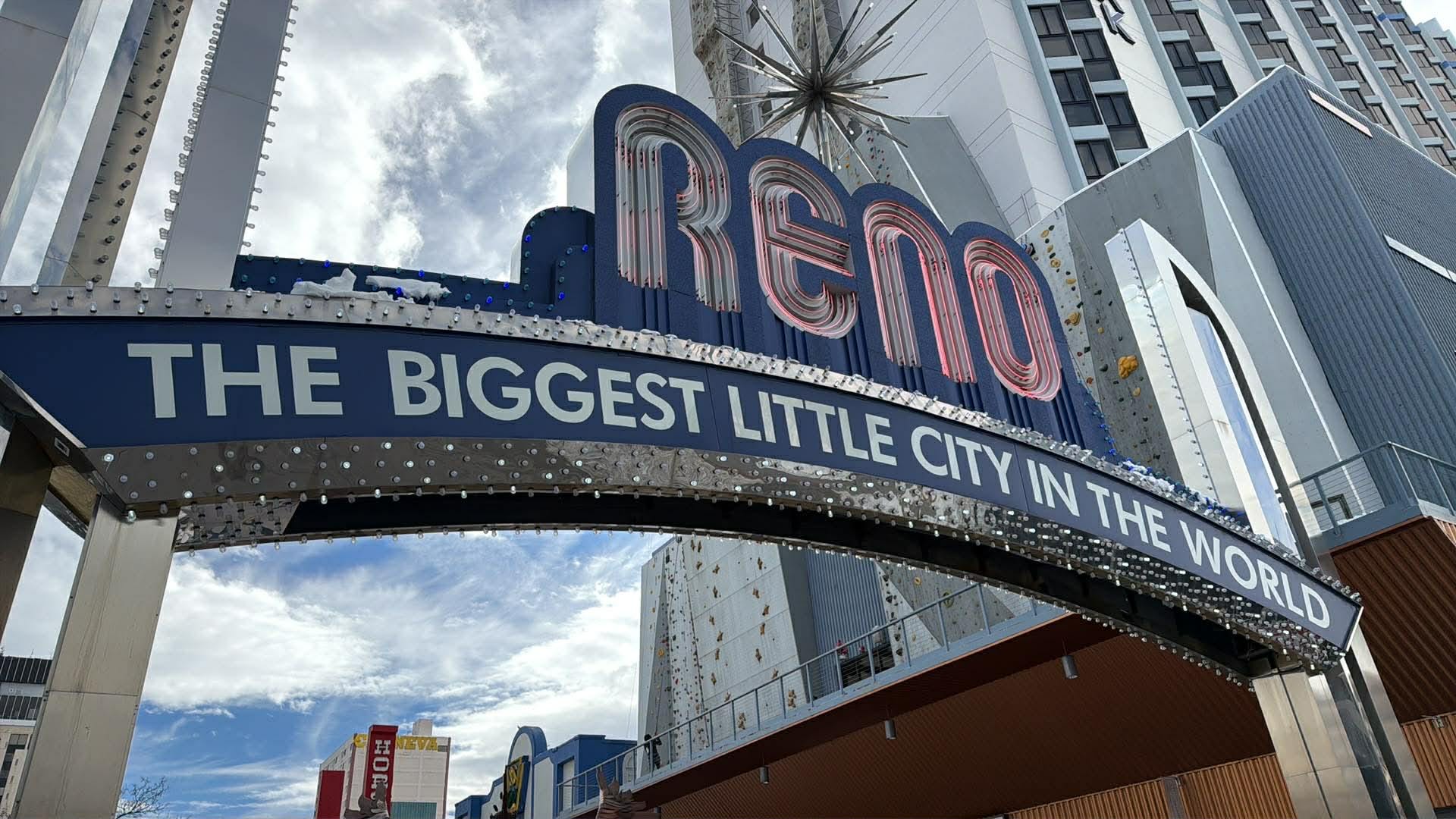
This isn’t a discussion about replacing the arch, which was the subject of some speculation back in 2015. Those conversations led to what was framed as a “refresh,” including replacing the gold sheathing with silver and painting it blue. Its thousands of light bulbs had already been replaced with LED bulbs a few years before.
Now the arch, which was erected in 1987, is on the agenda to discuss its maintenance costs and the difficulty of easily changing out the standard LED bulbs for colored bulbs in conjunction with various commemorations and campaigns:
“Staff has identified that modern lighting technologies, including color-changeable systems, could reduce physical handling of lighting components, lower long-term maintenance costs, and improve operational efficiency while maintaining the Arch’s visual impact.”
The report doesn’t elaborate on what those “modern lighting technologies” and “color-changeable systems” might be, but we might get an idea from the Gateway Arches that were installed over Las Vegas Boulevard in 2020. Those arches, installed by YESCO, feature more than 13,000 “RGB light-emitting diode (LED) pucks that are individually programmable.” That’s just my speculation, but seems likely.
Now let’s be clear: the 1987 Reno Arch is not technically a historic structure, in contrast with the classic Welcome to Fabulous Las Vegas sign, which is listed in the National Register of Historic Places. The Reno Arch currently gracing Virginia Street is just 39 years old, making it eleven years shy of the standard (and state-sanctioned) classification as “historic.” And obviously it’s been modified before. (And yes, the original Reno Arch was also repeatedly modified through its first decade, although it has retained the same appearance for the past 91 years).
So do we treat the Reno Arch as a typical sign, to be modified on an ongoing basis to take advantage of new technologies, or is it a structure of potential historic significance whose original design should be retained as much as possible? Past discussions have indicated widespread desire to retain the arch’s original neon lighting for all of the arch’s lettering, something that’s not currently being questioned. I’m curious to hear specifically what’s being proposed here and what public input might be sought prior to its potential return as an action item on a future agenda.
The Latest in Downtown Reno Development
News broke this past week that the historic 1934 Downtown Reno Post Office is for sale for $19 million. You can view the listing here. This gorgeous building is an excellent example of how to update a historic structure while beautifully retaining its historical integrity. Watch the video of how they did it here.
Downtown Makeover published a detailed overview of the “Reforma” project, the name given to the former Riverside Movie Theater building now being renovated by its new owner, the Living Stones Church. You might be surprised by the plans.
MEETINGS TO WATCH: The Reno City Charter Committee
The Reno City Charter Committee will convene for the first time this cycle on Thursday, February 26th (agenda here), in preparation for the 2027 session of the Nevada State Legislature. I provided some background on this committee back in March 2024 when they began their meetings for the 2025 session. And in July 2024, I reported on some of the City Charter changes they recommended to Council that year.
Those recommendations included adding requirements that Reno’s City Manager reside in Reno and that City Council must declare a special election to fill a vacated Council seat if there are more than 180 days until the next general municipal election (they currently may choose to either elect or to appoint a replacement, no matter how much of the departing councilmember’s term remains). This is Reno had some great coverage of that year’s joint meeting of the Council and Committee to discuss those recommendations, which Council decided NOT to pursue.
Let’s all pay attention to what they deliberate and recommend this year.
Join us for a screening of A Black Springs Homecoming
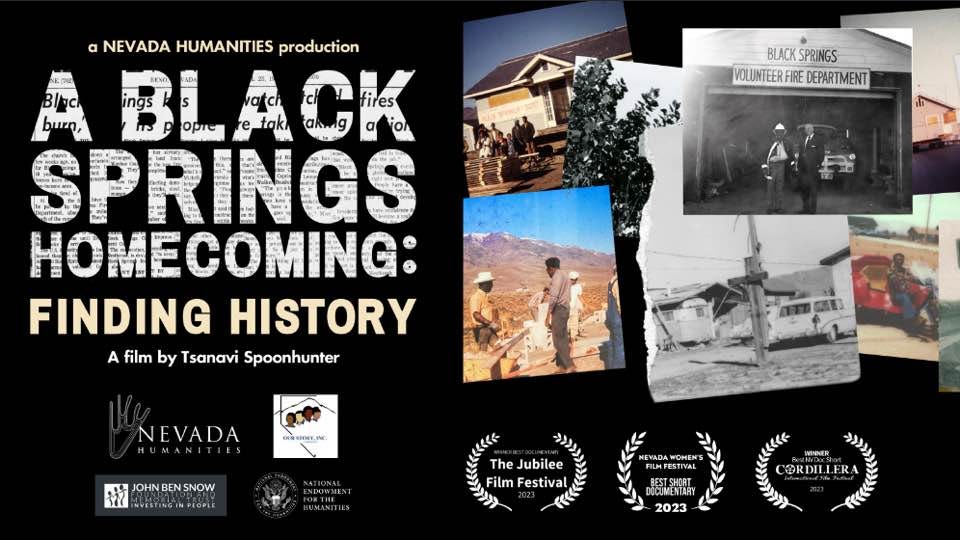
Lastly, Nevada Humanities, in collaboration with Truckee Meadows Community College, will host a screening of A Black Springs Homecoming: Finding History, the award-winning documentary produced by Nevada Humanities and directed by Tsanavi Spoonhunter, this Wednesday, February 25 from 11:30 am to 1:00 pm in TMCC’s Red Mountain Building, Room 256. This event is free and open to all.
The 27-minute film tells the story of Black Springs, a historically African American neighborhood just north of downtown Reno. It highlights how Black Springs’ residents built a lasting sense of community in the face of racial discrimination and economic hardship. I had the honor of working on this project as a historical consultant, and the screening will be followed by a conversation and Q&A with Demetrice Dalton, Helen Townsell-Parker, Serene Townsell, and me. More info here.
Have a good week, everyone.
Be sure to check out my Citizen Guide for helpful resources and links to help anyone become more informed and engaged in issues related to urban development (& more) in Reno.
You can view this and prior newsletters on my Substack site, subscribe to receive each new edition in your email inbox, and follow the Brief (and contribute to the ongoing conversation) on X, Facebook & Instagram. If you feel inspired to contribute, you may purchase a paid subscription through Substack or contribute via Venmo at @Dr-Alicia-Barber or via check to Alicia Barber at P.O. Box 11955, Reno, NV 89510.
Thank you for sharing all this info! I'd love to attend the viewing of A Black Springs Homecoming, but I have to work. Do you know if there are any plans for another showing or any other way I could see it? :)